
The Art Was Not the Problem. The Experience Around It Was.Luxury Art Platform for Ultra-High-Net-Worth Collectors
The gallery represented paintings by serious artists — works that had been acquired, exhibited, and appreciated by people for whom art is not a decorative purchase but a considered investment and a statement of cultural identity. The starting price for any work in the collection was upwards of ten to fifteen lakh rupees. The buyers were founders, industrialists, and family offices. People who are accustomed to a very specific standard of experience. The existing website was a catalogue. Product images on a grid, a contact form, and a PDF price list on request. It was not wrong, exactly. It was simply completely misaligned with the world it was supposed to inhabit. If someone is considering spending fifteen lakhs on a painting, they need to feel something before they reach out. They need to feel that this gallery understands the value of what it is presenting. They need to feel invited. The website was doing none of that.
2026
Timeline
Strategy
Category
The Challenge
Luxury is not about price. It is about context. The way a painting is presented — the negative space around it, the quality of the photography, the pacing of the experience — communicates whether it is worth taking seriously. The previous platform was presenting museum-grade work with the visual language of a basic e-commerce store. The website had no sense of journey. A visitor arrived at the homepage and was immediately confronted with a grid of artworks. There was no orientation, no editorial voice, no sense of being guided through the collection. Adding a new artwork, updating availability, changing exhibition information — all of this required going back to the developer who had built the original site. The mobile experience was broken at every step.
The Platform Did Not Communicate Value
No Experience Architecture
he Gallery Had No Independent Management Capability
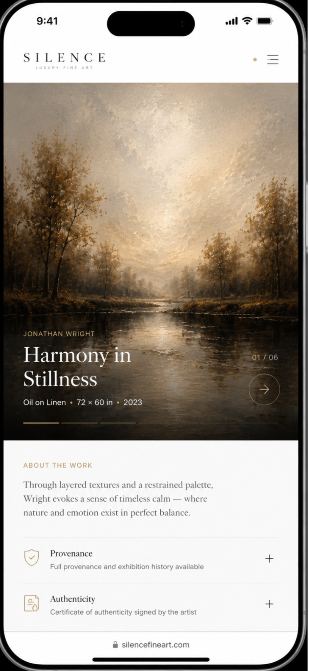
Mobile Experience Was Non-Existent
Strategy & Execution
Our Approach
Editorial Homepage
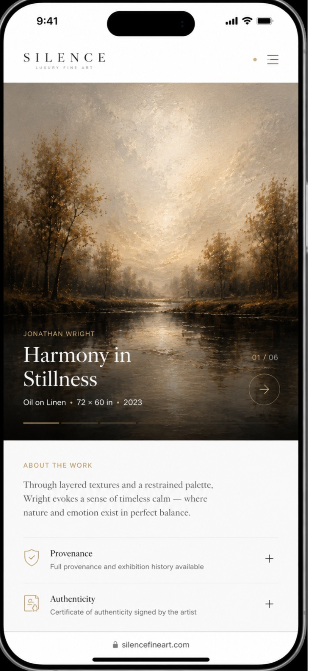
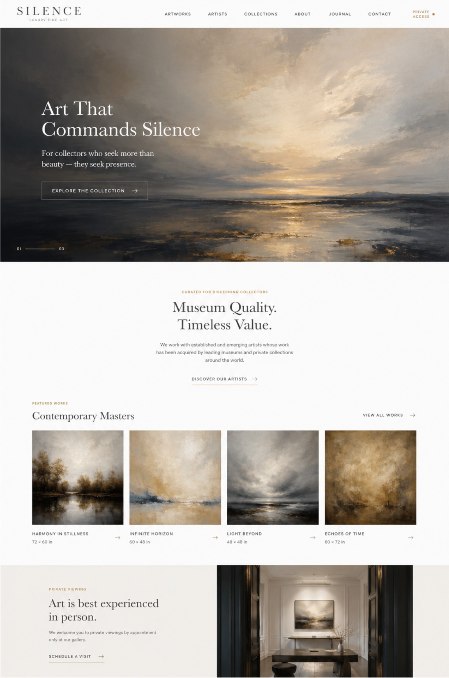
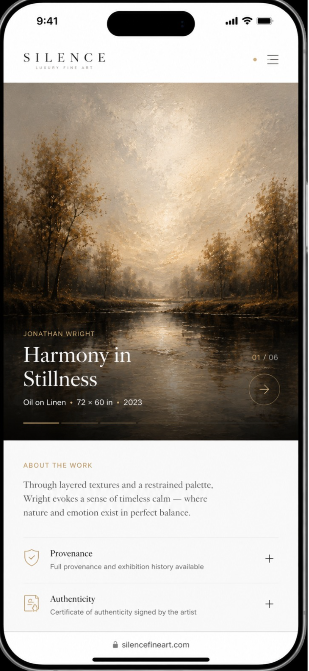
The homepage was redesigned around a single featured work — full viewport, no distractions, with the painting allowed to exist on its own terms before any information was introduced. Scrolling revealed a curated editorial section presenting the artist's context, followed by additional works. The experience was closer to a gallery opening than a shopping site.
Individual Artwork Pages
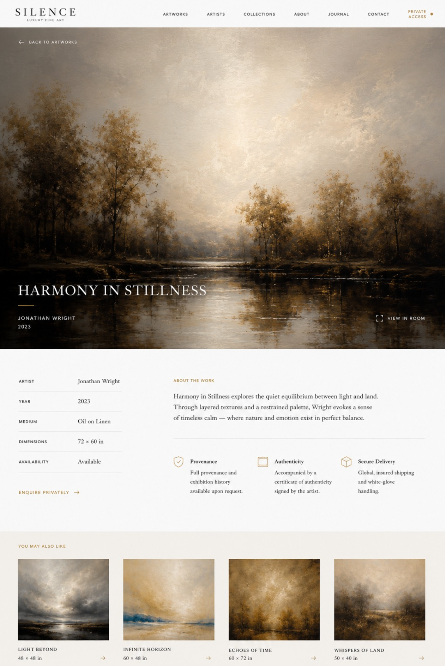
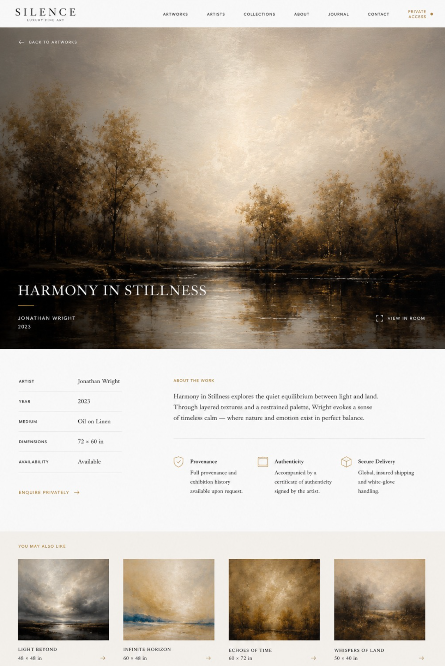
Each artwork received a dedicated page with room to breathe. Multiple photography angles, a detailed artist narrative, provenance information, and exhibition history where relevant. Enquiry was handled through a discreet, direct conversation request rather than an add-to-cart mechanic.
Collection Architecture
The collection was organised around themes, artists, and periods rather than by price or medium — the way a serious collector thinks, not the way a catalogue is organised. Navigation was intentional and unhurried
Bespoke CMS
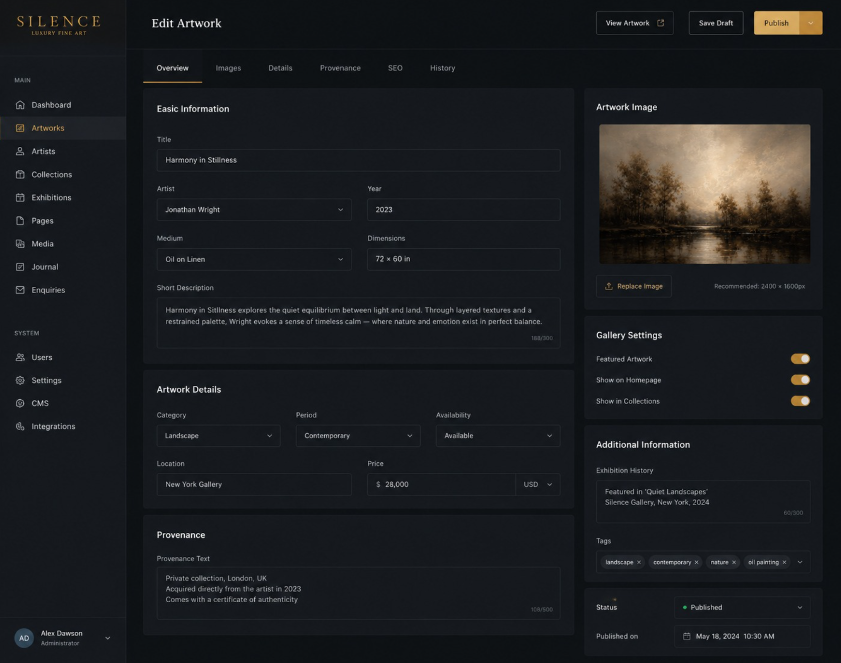
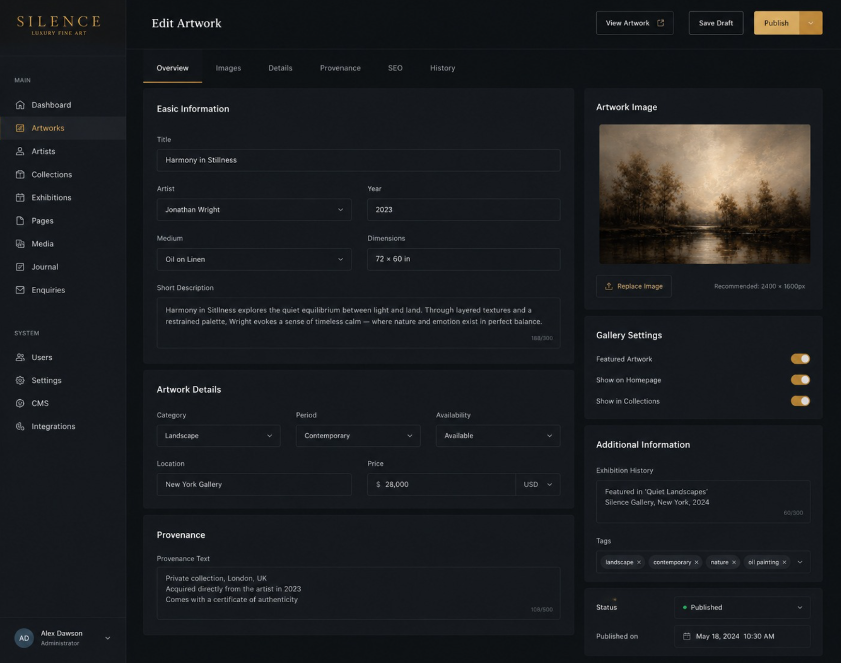
We built a custom content management system that gave the gallery complete autonomy over every element of the platform. Adding a new work took under three minutes. The system included fields for every relevant detail — artist biography, artwork dimensions, medium, year, exhibition history, and availability status.
Insight 01
Insight 02
The Results
Transformed
Enquiry Quality
Within the first month post-launch, the gallery owner noted that the nature of enquiries had changed. People were arriving at conversations already informed and further along in their decision-making.
Achieved
Operational Independence
The CMS eliminated the dependency on external technical support for catalogue management. The gallery could add, update, or archive works in real time.
Increased
Mobile Engagement
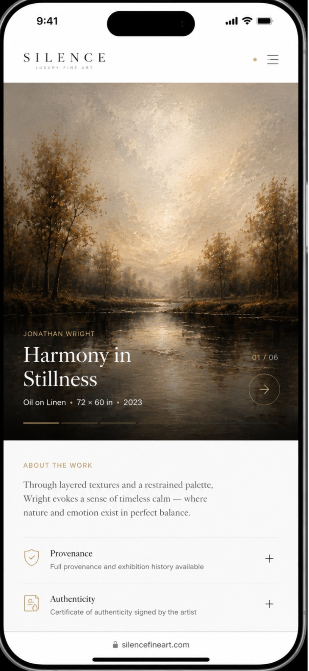
Post-launch analytics showed a significant increase in mobile session duration compared to the previous site.
Enabled
Sales Conversation Starter
The gallery owner began sharing individual artwork page links directly with prospective collectors before meetings.
The Impact
Higher Quality Collector Enquiries
People were arriving at conversations already informed and further along in their decision-making process.
Complete Catalogue Autonomy
The gallery gained complete operational independence through the bespoke CMS.
Improved Mobile Engagement
Visitors spent significantly more time engaging with artworks on mobile devices.
Thereisacategoryofwebsitethatexistspurelyasadigitalbusinesscard.Andthereisacategorythatactivelyparticipatesinthecommercialprocess—buildingtrust,communicatingvalue,andmovingtherightpeopletowardaconversation.Thisplatformcrossedfromthefirstcategorytothesecond. Foragalleryoperatingatthispricepoint,withbuyerswhomakedecisionscarefullyandexpectexcellenceateverytouchpoint,theplatformisnotasupportfunction.Itispartoftheproduct.Itneededtobebuiltaccordingly.

Behind Every Great Strategy,
There’s a Great Team.

















Let's Construct
Future.
Ready to scale? Drop us a line.